 Image 1 of 1
What does “Within Defined Limits” actually establish?
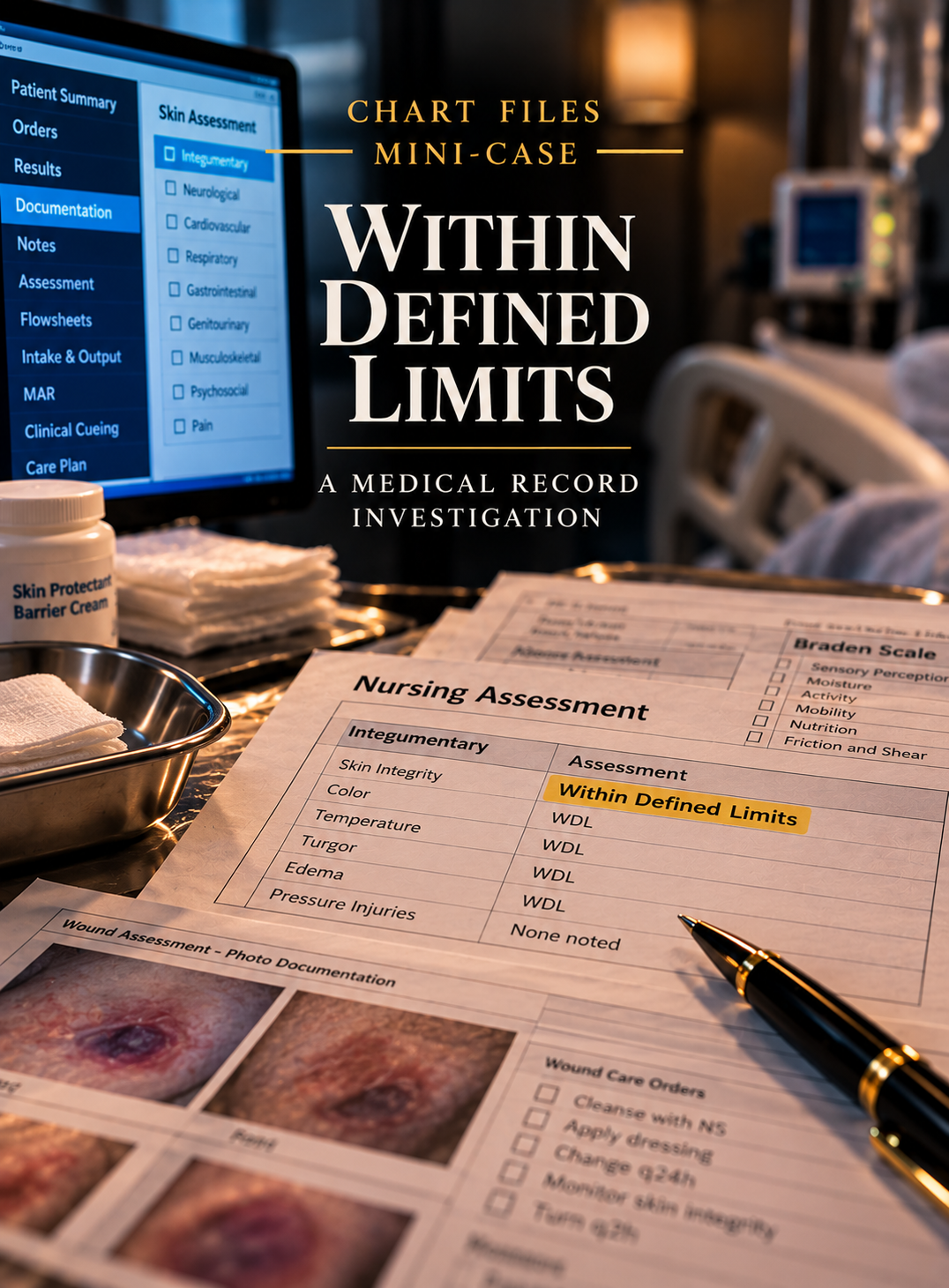
An elderly patient is hospitalized after a prolonged period on the floor and later develops a significant sacral pressure injury. The medical record contains an apparently reassuring finding: the patient's integumentary assessment was documented Within Defined Limits (WDL).
That entry seems important.
But before relying on it, an investigator needs to ask a different question:
How did that documentation get there?
Within Defined Limits is a 20–30 minute Chart Files Mini-Case designed for legal nurse consultants and medical record reviewers who want to look beyond the rendered chart and investigate the EHR processes that created it.
You'll examine conflicting skin assessments, charting by exception, documentation timing, and the evidentiary significance of EHR workflow. The case challenges you to determine how much weight should be given to an apparently specific clinical entry when the mechanism behind that entry tells a more complicated story.
This isn't simply a pressure-injury case.
It's an investigation into what an EHR entry actually proves — and what it doesn't.
One question. One answer you can defend.
Skills practiced: EHR documentation, charting by exception, conflicting clinical findings, present-on-admission analysis, audit-trail reasoning, documentation provenance, and evidence-based conclusions.
Estimated completion time: 20–30 minutes.
Format: Digital PDF mini-case with case materials and sealed analysis.
What does “Within Defined Limits” actually establish?
An elderly patient is hospitalized after a prolonged period on the floor and later develops a significant sacral pressure injury. The medical record contains an apparently reassuring finding: the patient's integumentary assessment was documented Within Defined Limits (WDL).
That entry seems important.
But before relying on it, an investigator needs to ask a different question:
How did that documentation get there?
Within Defined Limits is a 20–30 minute Chart Files Mini-Case designed for legal nurse consultants and medical record reviewers who want to look beyond the rendered chart and investigate the EHR processes that created it.
You'll examine conflicting skin assessments, charting by exception, documentation timing, and the evidentiary significance of EHR workflow. The case challenges you to determine how much weight should be given to an apparently specific clinical entry when the mechanism behind that entry tells a more complicated story.
This isn't simply a pressure-injury case.
It's an investigation into what an EHR entry actually proves — and what it doesn't.
One question. One answer you can defend.
Skills practiced: EHR documentation, charting by exception, conflicting clinical findings, present-on-admission analysis, audit-trail reasoning, documentation provenance, and evidence-based conclusions.
Estimated completion time: 20–30 minutes.
Format: Digital PDF mini-case with case materials and sealed analysis.