
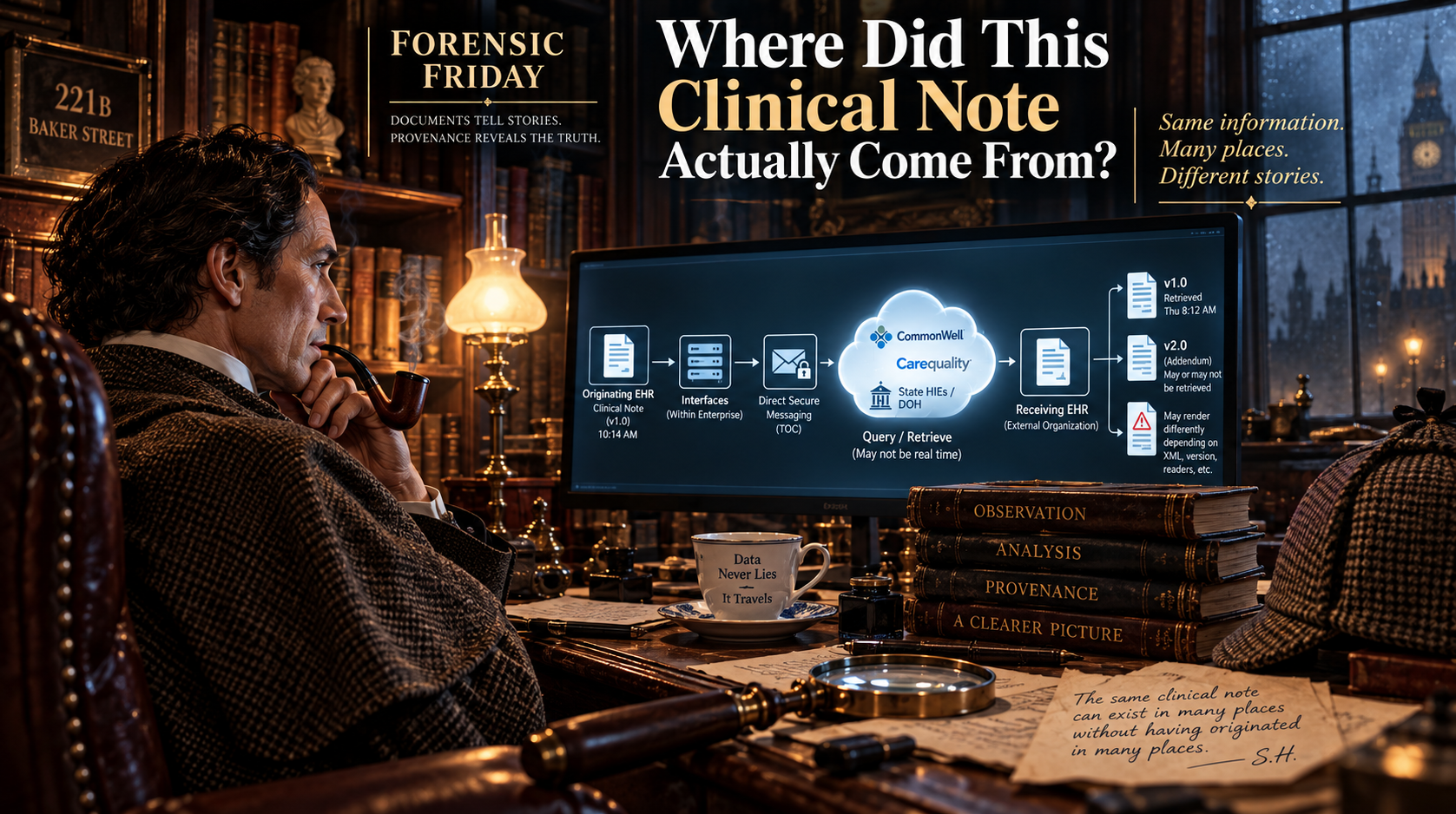
FORENSIC FRIDAY: Where Did This Clinical Note Actually Come From?
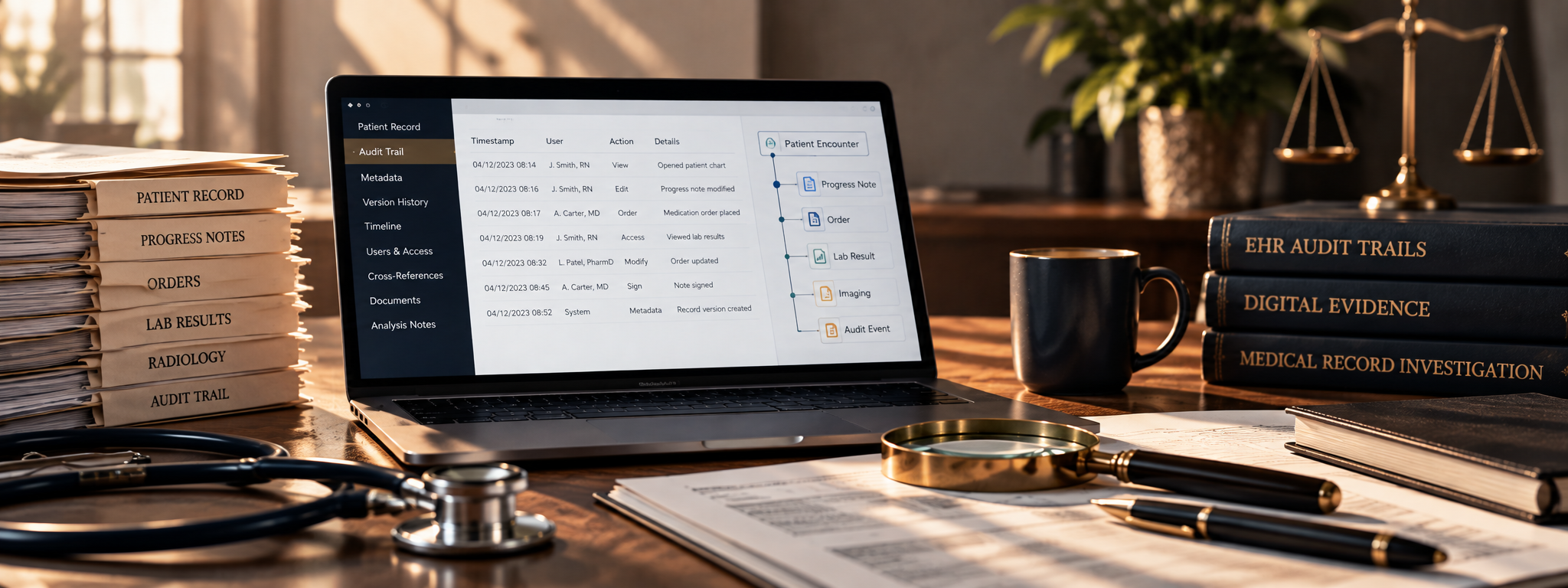
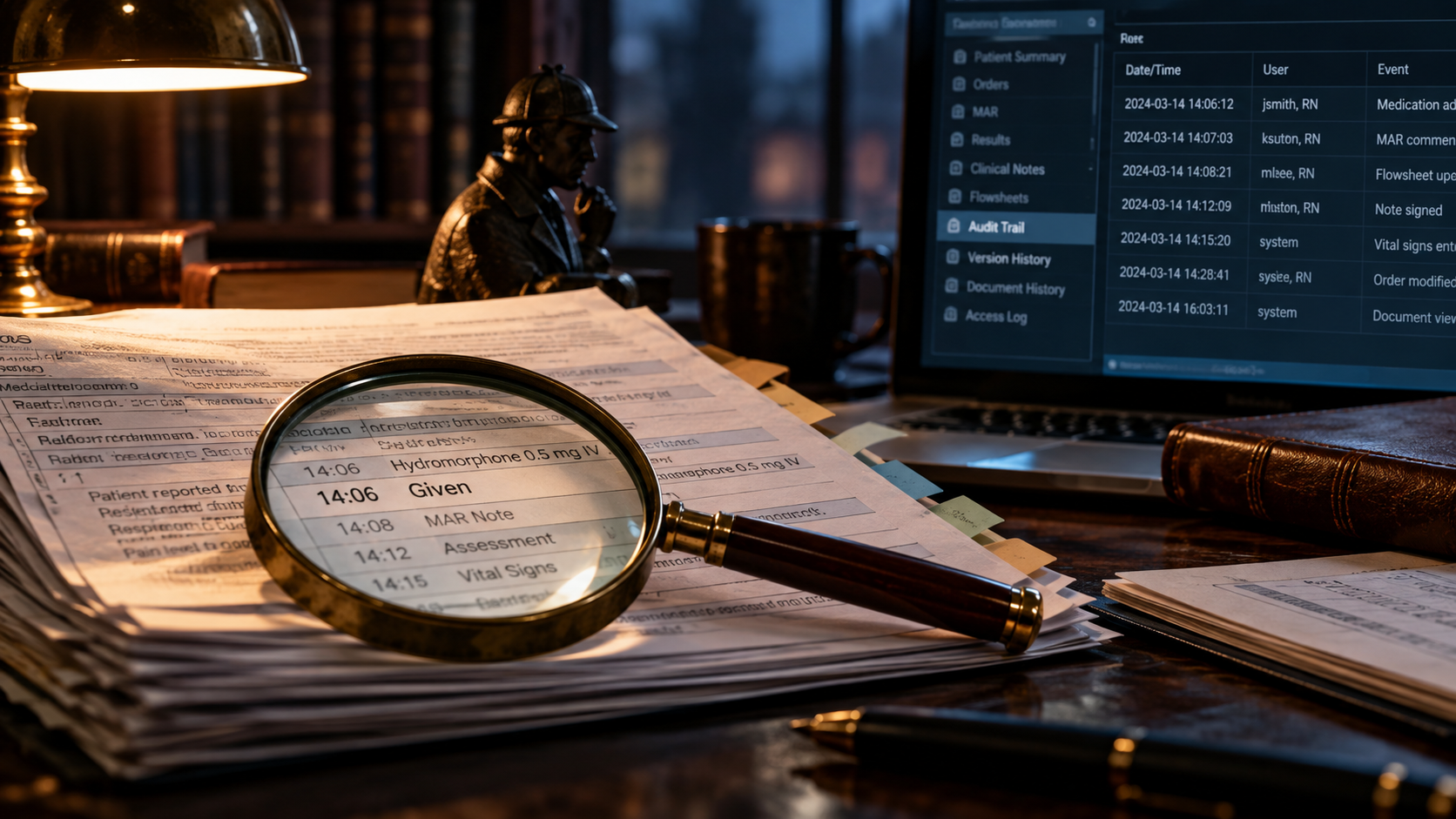
A clinical note can travel across EHRs, interfaces, interoperability networks, HIEs, and exchange documents — but what arrives may not always tell the full story of what originated. This Forensic Friday examines clinical note provenance, versioning, addenda, query/retrieve timing, CDA/C-CDA exchange, and the challenge of tracing copied information back to its true source.
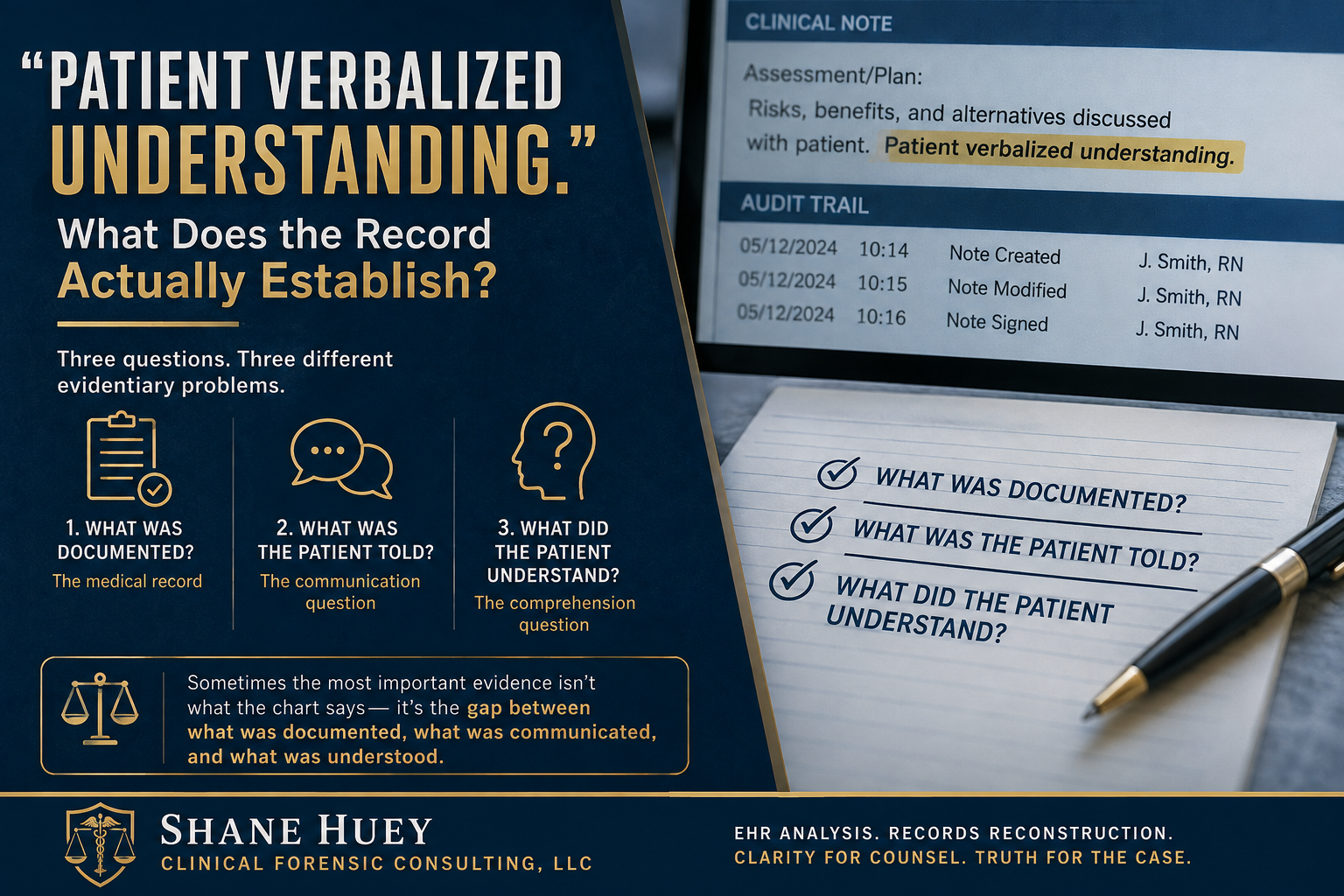
The Chart Says They Were Told. But What Did They Actually Understand?
There is a phrase that appears constantly in medical records:
“Patient verbalized understanding.”
It sounds definitive.
It isn't necessarily.
Because there are at least three different questions hiding inside that sentence:
What was documented?
What was the patient actually told?
What did the patient understand?
Those are not the same thing.
And when a medical record becomes evidence in litigation, that distinction can become extraordinarily important.
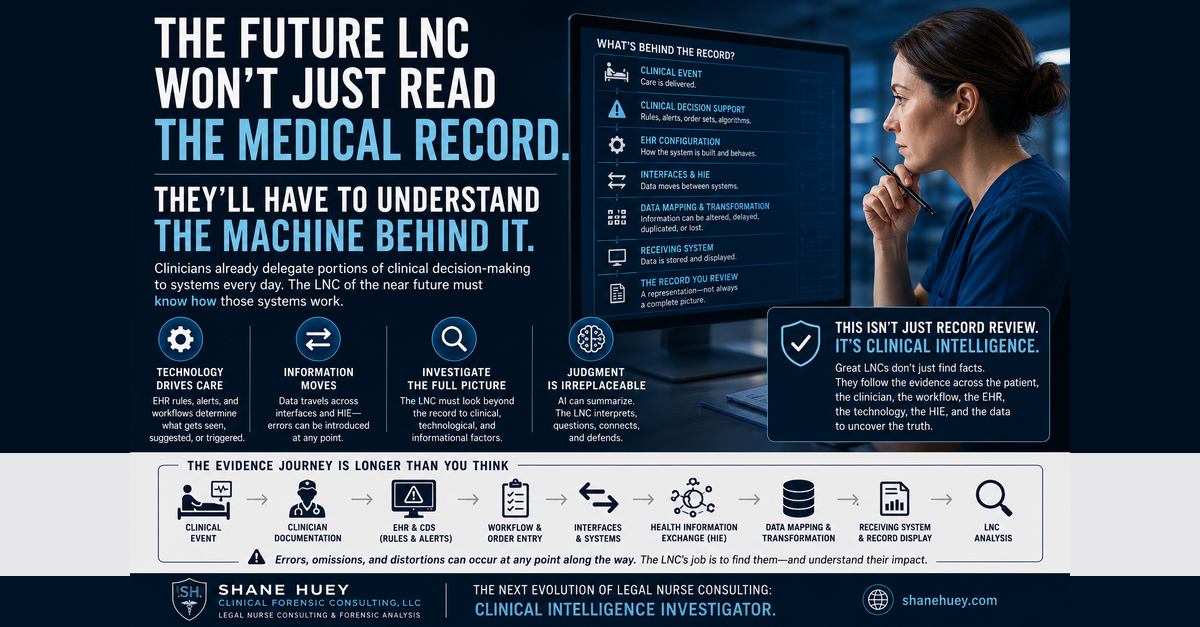
The Future LNC Won’t Just Read the Medical Record. They’ll Have to Understand the Machine Behind It.
I've been thinking about where legal nurse consulting is headed.
And I don't think the biggest change is going to be AI.
I think AI is only one part of a much larger shift.
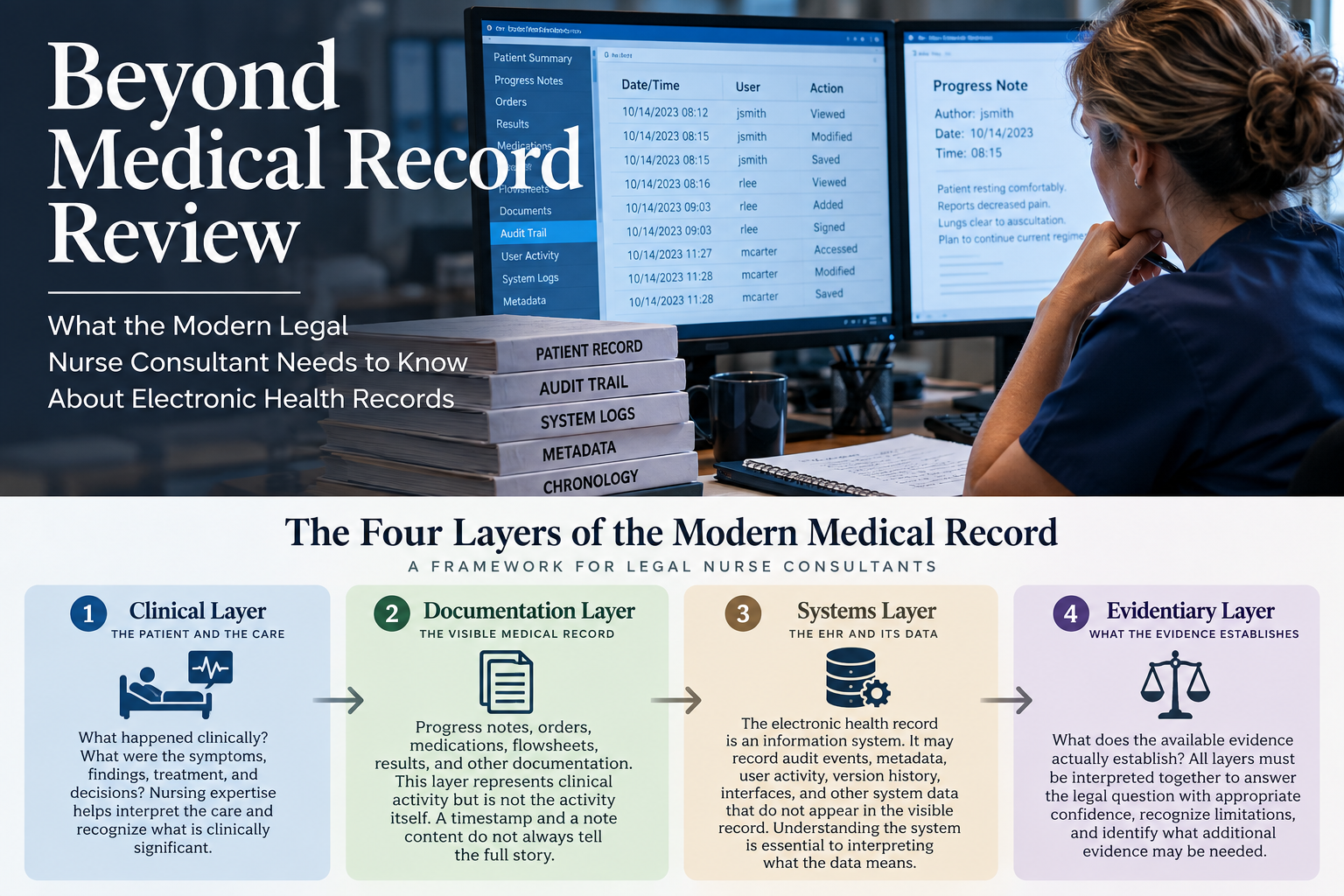
The medical record is no longer simply a record of what clinicians did.
Increasingly, it is the product of people, workflows, algorithms, decision-support rules, EHR configuration, interfaces, health information exchange, alerts, automation, and clinical judgment.
And here's the part I think the LNC profession needs to pay much more attention to:
Clinicians are already delegating portions of clinical decision-making to these systems.
Not because clinicians are incapable of making decisions.
Because modern healthcare is too complex to function without technology helping determine what information gets surfaced, what gets flagged, what orders get suggested, what protocols get activated, and what actions get placed into a clinician's workflow.
That changes what it means to investigate a medical record.
And I think the LNC of the near future is going to need to understand the technology behind the record almost as well as they understand the clinical events documented within it.
Most LNCs Are Using AI to Save Time. The New Federal Rules Are About to Make That a Liability.
Most consultants using AI right now are asking the wrong question. They're asking "does this save me time?" The question that actually matters is: "can I defend this under cross-examination?"
Those are not the same question, and the gap between them is about to get a lot more expensive.
What's actually changing
In June 2025, the Advisory Committee on Evidence Rules approved a new Federal Rule of Evidence — Rule 707 — aimed specifically at machine-generated evidence. The rule is short, and it says exactly what it means: when machine-generated output would be subject to Rule 702 if a human expert had said it instead, the court can only admit it if it independently satisfies Rule 702's reliability requirements. It went through public comment ending in February 2026 and is still moving through the rulemaking process — it isn't binding law yet, but it tells you exactly where federal evidentiary standards are headed, and several courts are already reasoning this way ahead of formal adoption.
There's a companion amendment to Rule 901 on authentication. If AI-generated evidence gets challenged, the burden shifts to whoever's offering it to prove it's more likely than not authentic before it comes in at all.
Translation: the era of "the AI said so" quietly riding into a case unexamined is ending. If it hasn't ended in your jurisdiction yet, it's coming.
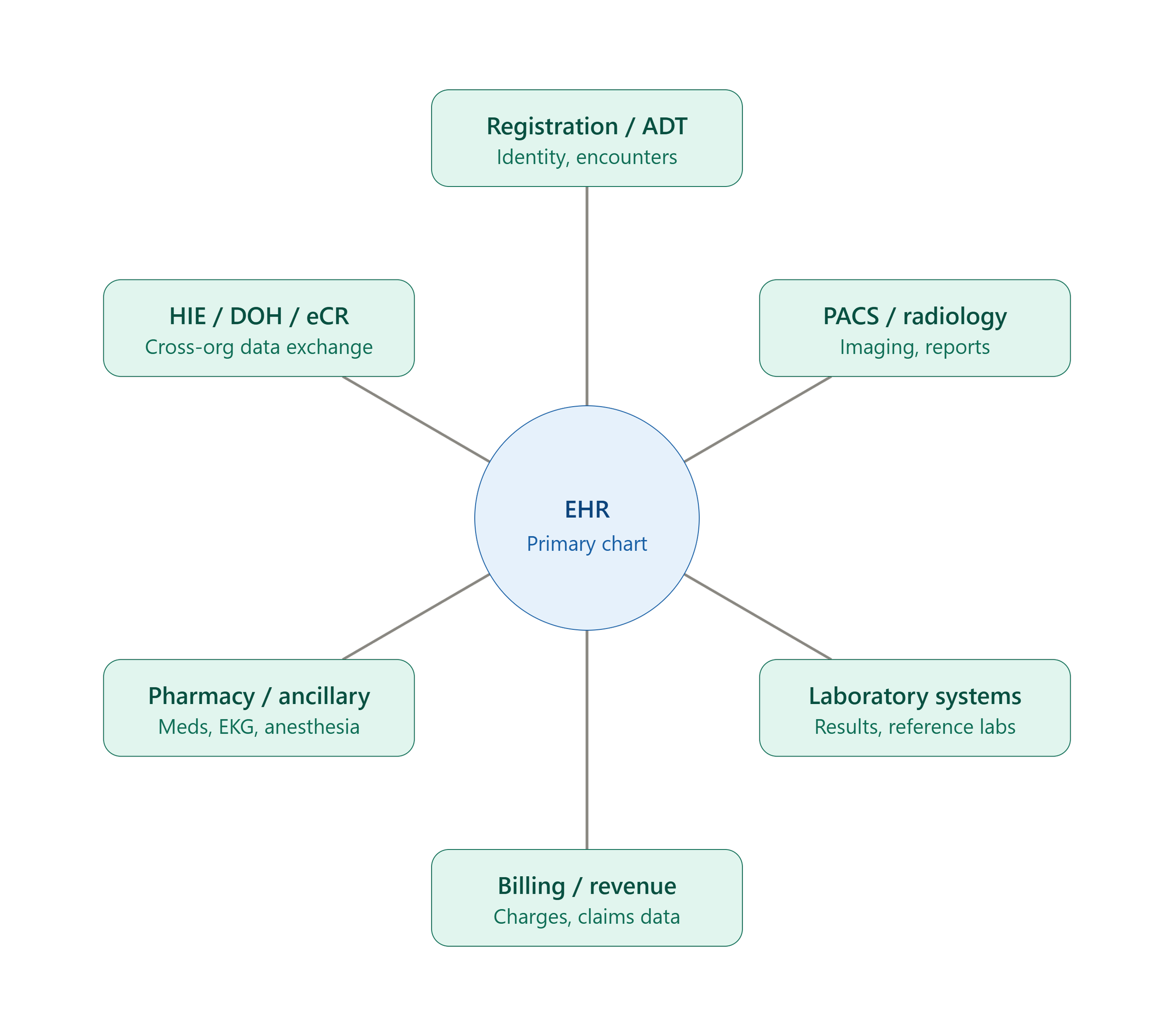
There Is No Such Thing as "The EHR": Why Attorneys and LNCs Need to Understand Clinical Systems Architecture
Ask most attorneys what a hospital's medical record looks like, and the mental picture is simple: one system, one login, one complete chart. Request the records, get the printout or the CD, done.
That picture is wrong — and in a case involving a serious injury, a missed diagnosis, or a documentation dispute, that wrong picture can cost you.
Yes, most healthcare organizations run a single primary electronic health record (EHR) platform — an Epic, an Oracle Health (Cerner), a MEDITECH. But the EHR is the hub, not the whole wheel. Around it sits a constellation of separate, specialized systems — some fully integrated, some only loosely connected, some barely connected at all. Understanding that architecture, at a conceptual level, is one of the most underused skills in medical-legal record review.