The Chart Says They Were Told. But What Did They Actually Understand?
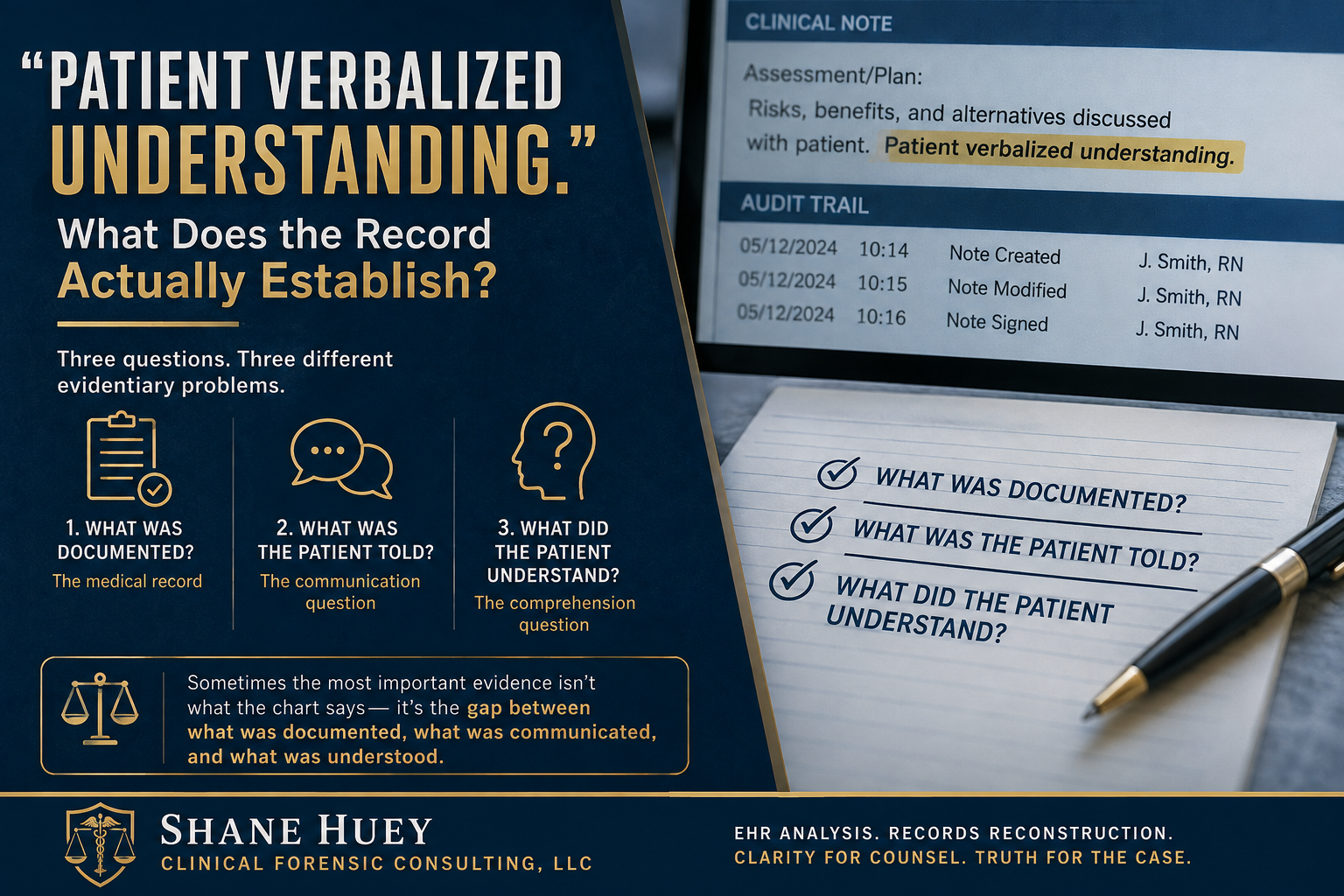
There is a phrase that appears constantly in medical records:
“Patient verbalized understanding.”
It sounds definitive.
It isn't necessarily.
Because there are at least three different questions hiding inside that sentence:
What was documented?
What was the patient actually told?
What did the patient understand?
Those are not the same thing.
And when a medical record becomes evidence in litigation, that distinction can become extraordinarily important.
The Future LNC Won’t Just Read the Medical Record. They’ll Have to Understand the Machine Behind It.
I've been thinking about where legal nurse consulting is headed.
And I don't think the biggest change is going to be AI.
I think AI is only one part of a much larger shift.
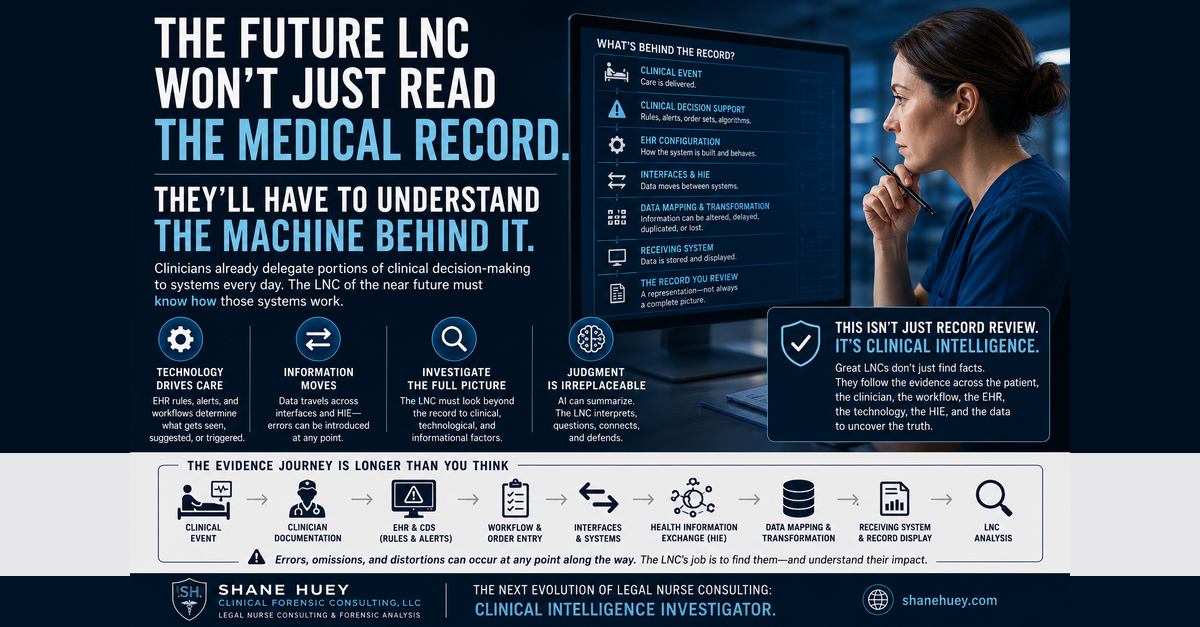
The medical record is no longer simply a record of what clinicians did.
Increasingly, it is the product of people, workflows, algorithms, decision-support rules, EHR configuration, interfaces, health information exchange, alerts, automation, and clinical judgment.
And here's the part I think the LNC profession needs to pay much more attention to:
Clinicians are already delegating portions of clinical decision-making to these systems.
Not because clinicians are incapable of making decisions.
Because modern healthcare is too complex to function without technology helping determine what information gets surfaced, what gets flagged, what orders get suggested, what protocols get activated, and what actions get placed into a clinician's workflow.
That changes what it means to investigate a medical record.
And I think the LNC of the near future is going to need to understand the technology behind the record almost as well as they understand the clinical events documented within it.